

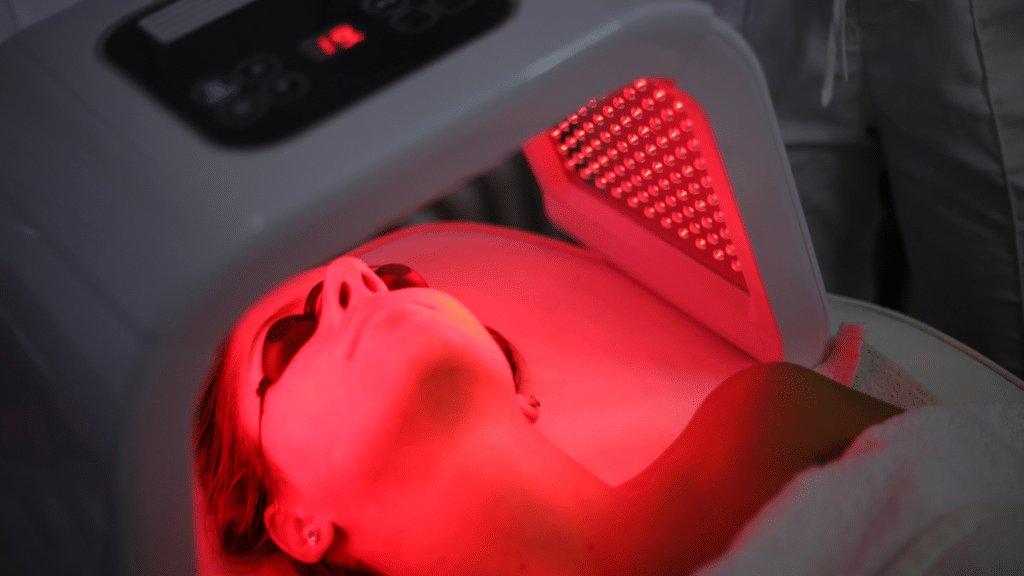
Does red light therapy improve sleep? Let’s look at what sleep experts and scientific studies have to say about it.
Over the past year, red light therapy has become a popular topic in beauty, fitness and, more recently, sleep. It claims to have a range of benefits, from skin health, anti-ageing properties and muscle recovery.
With a concept so new, many are wondering if red light therapy can have a positive effect on our sleep. It might be tempting to jump straight into trying red light therapy, however, it’s important to know that the evidence of its effectiveness is still developing.
Let’s take a look at what sleep experts and sleep studies have to say about it.
What is red light therapy?
Red light therapy is a treatment that uses low levels of specific wavelengths of red and near-infrared (NIR) to promote cellular repair. It’s mostly used to improve the appearance of skin, targeting conditions such as acne, roseacea and wrinkles, as well as for hair growth, wound healing, athletic performance and sleep.
The red light devices are available in various forms, including masks, wands, hand-held panels, laser caps, and full-body systems. They work by simply exposing the skin to the red light with shorter wavelengths targeting top layers of the skin for fine lines and dark spots, while the longer ones aim to boost collagen, repair skin cells and improve muscle recovery.
What does the research say about it?
There have been quite a few studies around red light therapy and sleep, with a National Library of Science publishing a review of the effects of it on insomnia. The results demonstrate that red light therapy shows statistically significant improvements in sleep quality but concludes that larger clinical trials are needed before recommendations can be made.
Another study on red light therapy and sleep quality links it to reduced inflammation, improved cellular energy production and support for healthy circadian rhythms – all of which contribute to potential benefits for sleep regulation. Once again, researchers emphasise the need for further studies to validate the long-term effects of red light therapy.
What do sleep experts say?
Stanford Medicine experts Zakia Rahman and Nour Kibbi say that while it might seem that red light therapy is a new concept, in reality, this topic dates back to 1960, when a Hungarian scientist was exploring whether exposure to red light would cause mice to develop skin cancer. In contrast, it stimulated hair growth.
According to Zakia Rahman and Nour Kibbi, enough evidence is there to prove the effectiveness of red light therapy for hair regeneration and wrinkle reduction, however not enough of it to support claims for improved athletic performance and sleep quality. While red light does, in fact, work – the effectiveness of it depends on various factors such as wavelengths, frequency of usage and the quality of the red light device.
So, can red light therapy improve your sleep?
The current evidence of red light therapy and its effectiveness is encouraging but not conclusive. While some people might notice benefits in sleep quality, this result varies considerably and depends on the nuances of using red light therapy. While researchers continue to investigate red light therapy through higher-quality studies, sleep experts recommend sticking to proven habits, such as maintaining a consistent sleep schedule, limiting screen time before bed and creating a dark sleep environment.
If you’re looking for new technologies to improve your sleep, getting the basics right is the first and most important step.
Find a store near you and test-drive our range of pressure relieving and naturally cooling Medical Grade™ foam mattresses to kickstart your journey to healthier sleep.