

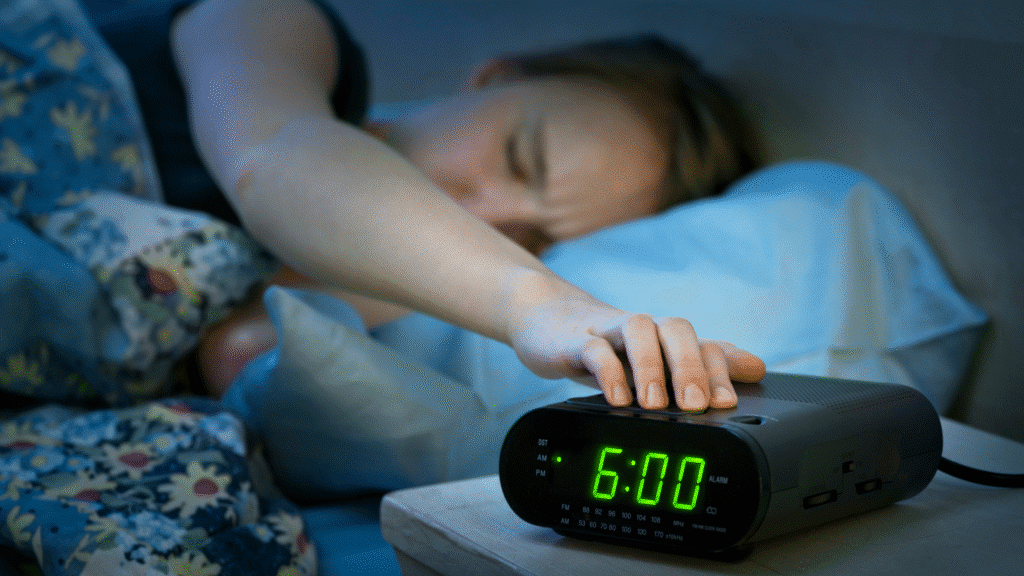
We all enjoy an extra few minutes in bed, but is hitting the snooze button having a detrimental effect on your sleep quality?
A recent study in Scientific Reports, which assessed 21,000 participants over 6 months for an accumulated 3 million nights of sleep, found that 56% of nights ended with an extra 11 minutes of sleep after the alarm clock had gone off.
But what does this say about what is clearly a common sleep habit? Is hitting the snooze button a harmless indulgence, or a sign of deeper issues? And how can you improve your sleep hygiene to ensure you feel well rested by the time the alarm clock rings?
Does longer sleep mean worse quality sleep?
One of the most interesting findings of the study is that those participants who slept the longest were the most likely to hit snooze. People who slept for an average of 10 hours a night were twice as likely to hit snooze than those who slept for 6 hours or less.
While it is logical to assume that more sleep equals better rest, these results indicate that this is not necessarily the case. Many of those who slept for longer woke up still feeling tired, meaning the sleep they got was somehow insufficient.
Yet hitting the snooze button is not the remedy for a poor night’s sleep, according to the report.
That is because every time you are forcibly wakened by an alarm, your body releases adrenaline and cortisol (a stress hormone) to wake you up. Hitting snooze even once every morning increases your heart rate and blood pressure, potentially leading to long-term health risks.
Neither will an extra five or ten minutes of rest meaningfully add to your sleep quantity, as it does not provide your body with enough time to enter the deeper sleep stages, where rest is more restorative.
Hitting snooze and sleep disorders
There are many reasons why someone may feel the need to hit snooze even after hours of sleep. In fact, feeling groggy when you first wake up is incredibly common, with very few of us waking up feeling bright-eyed and bushy tailed.
However, if you never seem to stop feeling exhausted, especially in the mornings, that could be a sign of an underlying sleep disorder.
Conditions such as sleep apnoea, insomnia, hypersomnia, or sleepwalking could all prevent you from getting enough rest during the night. If you’re worried you may be suffering from one of these disorders, contact your doctor, who will be able to refer you to a sleep expert.
How to ensure more restful sleep
To improve the quality of your sleep and to stop any overreliance on the snooze button, there are several simple ways to improve your sleep hygiene.
The first is to maintain a consistent bedtime and wake up time as much as possible. This will reprogramme your circadian rhythm (body clock), so you feel tired when you go to bed and begin to wake up naturally in the mornings. Give yourself sufficient time to sleep as well. If you need eight hours every night, give yourself eight hours.
Secondly, maintain an optimal sleep environment. The easiest place to fall asleep is a cool, dark, quiet bedroom that you do not use for anything other than sleep.
Thirdly, avoid caffeine, alcohol, and overeating in the hours before bed. Caffeine is a stimulant, alcohol may help you get to sleep but will worsen the quality of that sleep, and if your body is still digesting when you’re in bed, it will try to keep you awake to do so. Also avoid screens before bed, as their blue light keeps your brain alert and active.
An occasional lie-in is one of life’s little luxuries, but don’t let the snooze button rule your mornings.
Looking to improve your sleep quality? Start by getting the sleep surface right. Explore the Mammoth range today and find your nearest stockist here.