

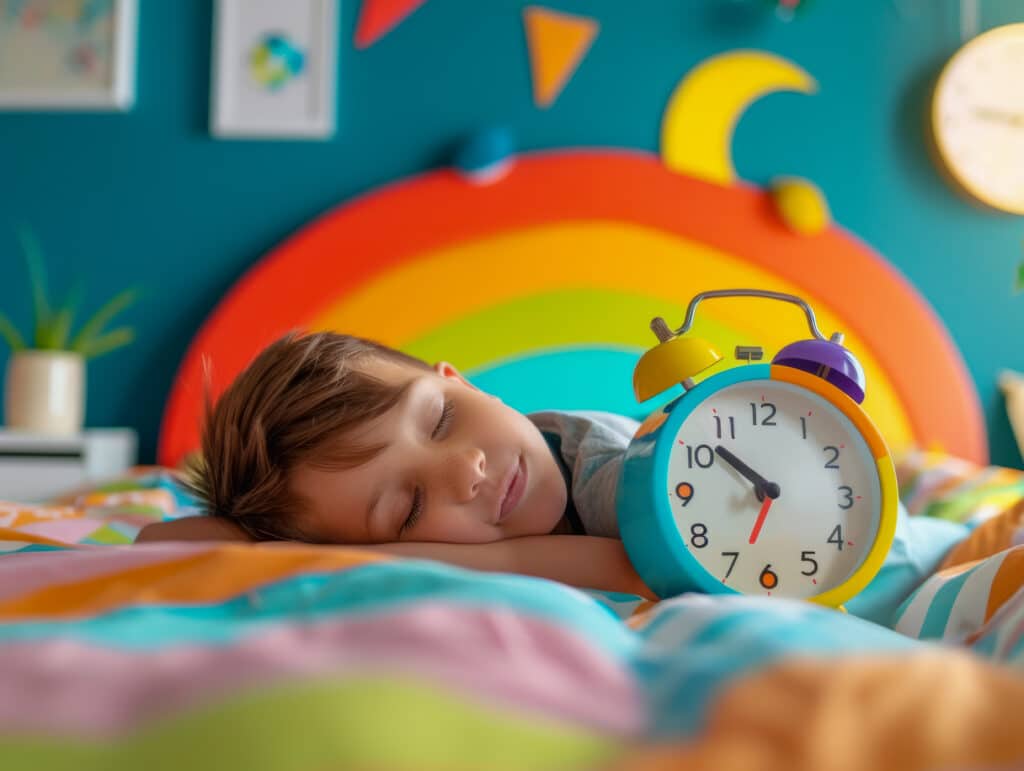
Quality sleep is the foundation of a child’s healthy development, whether they’re a newborn or an adolescent.
A well-rested child is a happy child. Sleep helps them develop their memory, their vocabulary, their attention span, their motor skills and overall cognitive performance, as well as a healthy body.
As your child ages, their sleep needs will change with them. Understanding how much sleep they require will help you guide them into a healthy lifestyle, ensuring their future wellbeing.
How much sleep should a child get?
It is important to pay attention to your child’s needs to understand how much sleep they need. Every child is different, and some will require less sleep than others.
That said, there are certain guidelines you should bear in mind for how much sleep children need at various ages.
Newborns
Newborns need the most sleep of any children, typically 14 to 17 hours a day. This sleep will be interrupted by their feeding schedule, meaning they’re unlikely to get it all at once. Try to lull them into a consistent sleep routine (though don’t force it) so that both they and you get enough rest.
Infants
Infants aged 4 months to 1 year need around 12 to 15 hours sleep a day. Naps (2-3 hours a day) will help them consolidate memories during this important developmental stage. This is when children start to fall into a more predictable sleep routine, though they are unlikely to sleep for eight hours a night just yet.
Toddlers
Toddlers, aged 1 to 2 years, need about 11 to 14 hours sleep, with 1 to 3 hours of this coming from daytime naps. They should have a more settled nighttime routine by this point.
Preschoolers
Preschoolers, aged 3 to 5, will get around 10 to 13 hours sleep, and will abandon daytime naps altogether during this stage. This is when children really start to develop their emotional, cognitive, and social skills, and getting enough sleep will help them regulate their new emotions and hone their new skills.
Older children
School aged children (6 to 13) will need 9 to 11 hours sleep every night for healthy development. Some studies suggest that occasional naps after school may help them develop academically and boost their sense of wellbeing.
Common sleep problems in children
Sleep is essential for healthy mental, physical and emotional development in children. Lack of sleep has been linked to poor academic performance, low mood, lack of appetite, and immune disorders.
While sleep disorders like insomnia are rare in children, some common sleep problems may be affecting the amount of rest they get.
Every child has nightmares, and many have night terrors. While these are frightening, especially for young children who have trouble distinguishing fact and fantasy, they are rarely anything to worry about. Let them know they’re safe and try to keep them in bed if possible. If nightmares become frequent or more intense, you may wish to seek the help of a child psychologist.
Sleep talking and sleepwalking are common in children under 13, especially during light sleep and times of stress. If your child sleepwalks, safety-proof their bedroom.
Every child will snore occasionally, but excessive snoring may be a symptom of sleep apnoea, or interrupted breathing. If you suspect sleep apnoea, make an appointment with your doctor to get it under control.
How to ensure a child gets enough sleep
- Establish a regular sleep routine as early as possible, to lull their body clocks into a predictable rhythm.
- Avoid bright lights, such as TVs, phones, and tablets in the hour or two before bed.
- Keep their bedroom cool, quiet, and dark (a nightlight is fine if they’re scared of the dark).
- Give them a healthy diet, avoiding large meals and sugary snacks close to bedtime.
- Plenty of light and exercise during the day is good, but too much exercise may make them overtired, meaning they’ll find it harder to fall asleep.
Children are more astute than you might think, so be sure to let them know they are safe and loved, so they can drift off feeling secure. Healthy sleep is they secret to a healthy child.
Looking to improve your sleep quality? Start by getting the sleep surface right. Explore the Mammoth range today and find your nearest stockist here.